LIN
CANExplorer accesses LIN (ISO 17987, LIN 2.x) through Linux LIN drivers that present the bus as a SocketCAN interface, following the convention of sllin:
| CAN frame | LIN |
|---|---|
| Identifier 0x00–0x3F | LIN frame identifier |
| Remote (RTR) frame | Header: sent, the master sends the header and a slave answers; received, a header seen on the bus |
| Data frame | Response: sent by the master, header and response are sent together; received, the response to a header |
See Installation to set up sllin. With the VirtualBus interface LIN works without hardware, e.g. with the LIN slave simulator.
LIN connections
Create a connection with bus type LIN, interface SocketcanBus and the channel of the LIN driver (e.g.
sllin0), and the Baud rate of the bus (19200 by default). The baud rate is used for the bus load; the driver's
own setting applies to the bus.
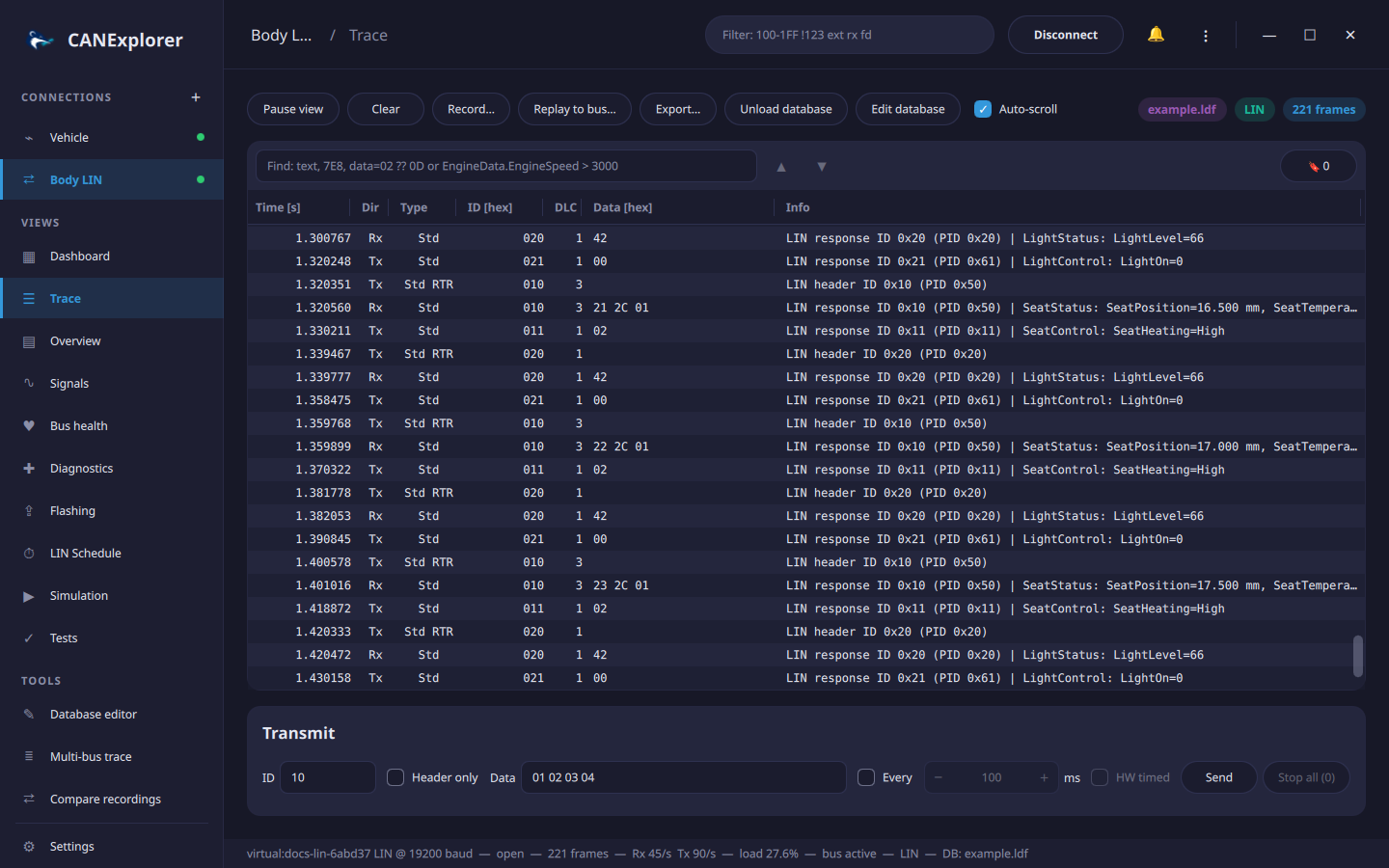
The trace shows headers and responses with their protected identifier (PID):
LIN header ID 0x10 (PID 0x50)
LIN response ID 0x10 (PID 0x50) | SeatStatus: SeatPosition=5.000 mm, SeatTemperature=-10.000 degC
LIN master request NAD 0x01 SF: ReadDataByIdentifier F1 90
Diagnostic frames (master request 0x3C, slave response 0x3D) are reassembled with the LIN transport layer and their node configuration (AssignNAD, ReadByIdentifier, …) or UDS services described. Checksums are verified by the driver and not shown.
LDF files
Load an LDF (LIN description file) with Load database… to decode and plot the signals. Physical encodings are shown with units, logical encodings with their texts.
Master schedule
The LIN Schedule view runs the schedule tables of the LDF with CANExplorer as master:
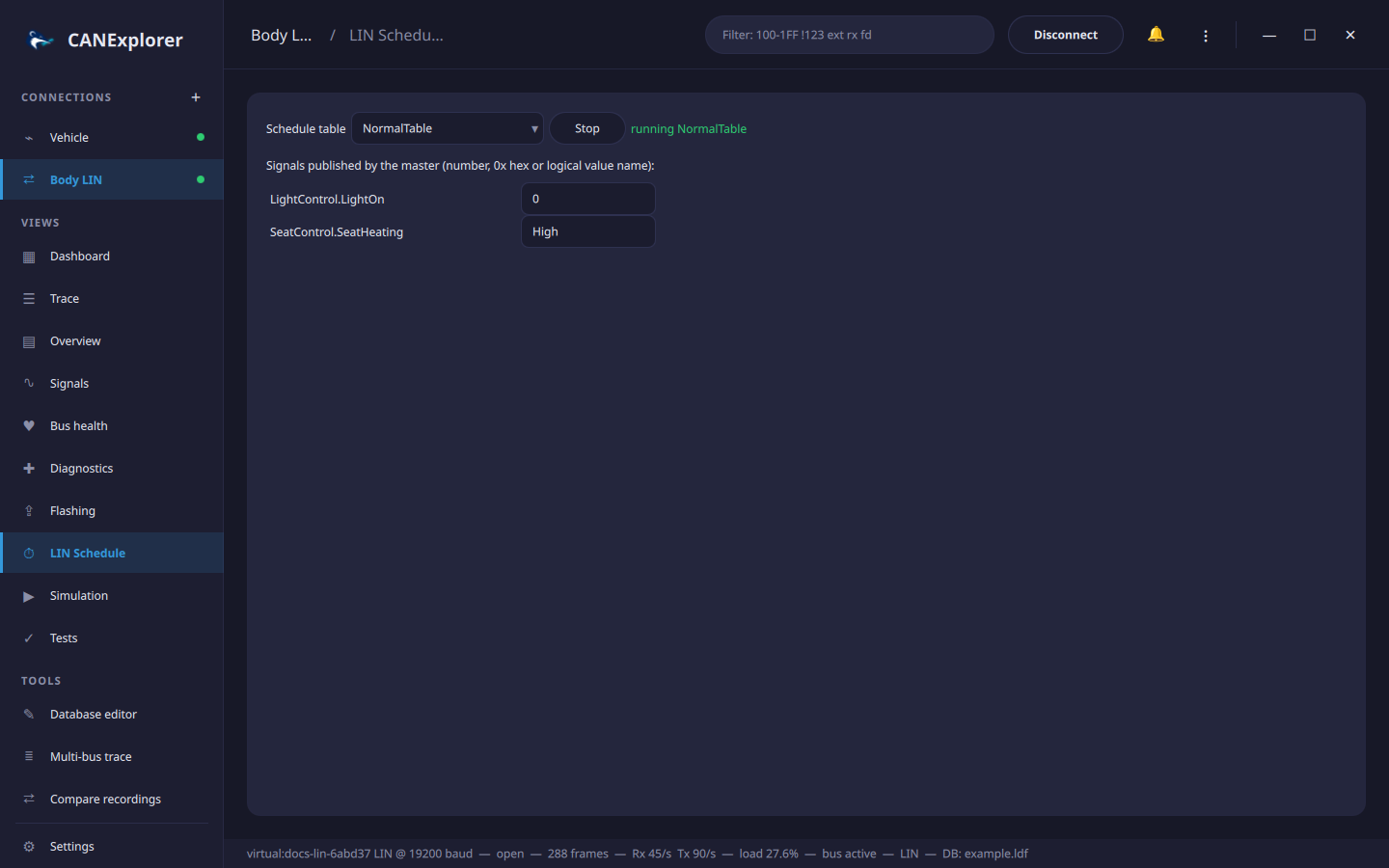
- Frames the master publishes are sent with header and response, using the values of the master signals listed
below the table. Edit a value to change it: a number (decimal or
0xhex) or the name of a logical value (e.g.High). - For frames published by slaves only the header is sent; the slaves answer.
- Slave response entries poll the slaves; diagnostic requests are sent by the Diagnostics view when needed rather than in master request slots.
Start and Stop control the schedule; disconnecting stops it.
Transmitting
The transmit panel has Header only instead of RTR: it sends a header for a slave to answer. Identifiers are
00–3F, responses have 1 to 8 bytes.
Diagnostics
The Diagnostics view uses the LIN transport layer on LIN connections; set the NAD of the slave.